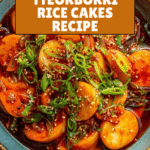
Korean Spicy Rice Cakes Recipe
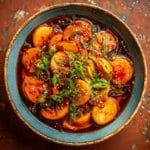
This classic Korean Spicy Rice Cakes recipe features chewy cylindrical rice cakes simmered in a flavorful spicy broth made with gochujang, gochugaru, and a homemade anchovy-kelp broth. Enhanced with onions, cabbage, green onions, and optional boiled eggs, this comforting dish is perfect for those craving authentic Korean street food flavors at home.
- Prep Time: 15 minutes
- Cook Time: 25 minutes
- Total Time: 40 minutes
- Yield: 4 servings 1x
- Category: Main Dish
- Method: Stovetop
- Cuisine: Korean
Ingredients
Scale
Rice Cakes and Vegetables
- 17.6 oz Korean cylindrical rice cakes (tteok)
- 1 small onion, sliced
- ½ cup chopped cabbage (optional)
- 2 green onions, sliced diagonally
- 2 boiled eggs, peeled (optional)
Broth
- 3 cups water
- 1 piece dried kelp (kombu), approx. 3 x 3 inches
- 4 dried anchovies, heads and guts removed (optional, omit for strict vegetarian)
Sauce
- 3 tablespoons gochujang (Korean chili paste)
- 1 tablespoon gochugaru (Korean chili flakes)
- 2 tablespoons soy sauce
- 1 tablespoon sugar
- 1 tablespoon honey or corn syrup
- 2 cloves garlic, minced
Garnish
- 1 tablespoon sesame seeds
Instructions
- Prepare Rice Cakes: Soak the rice cakes in warm water for 10 minutes if they are firm or refrigerated to soften them slightly before cooking.
- Create Broth: In a medium pot, combine 3 cups of water with the dried kelp and anchovies (if using). Bring to a simmer and cook gently for 10 minutes to extract flavor. Remove and discard the solids, reserving the broth.
- Make Sauce: Whisk the gochujang, gochugaru, soy sauce, sugar, honey, and minced garlic into the hot broth until completely dissolved, creating the spicy sauce base.
- Cook Rice Cakes and Vegetables: Add the soaked rice cakes, sliced onion, and cabbage (if using) into the pot with the sauce. Bring the mixture to a gentle boil, stirring occasionally to prevent sticking.
- Simmer to Finish: Reduce heat and simmer for 10 to 15 minutes, allowing the sauce to thicken and the rice cakes to become soft and chewy.
- Add Final Ingredients: Stir in the sliced green onions and peeled boiled eggs (if using) during the last 2 minutes of cooking to warm through.
- Serve: Transfer the spicy rice cakes to a serving dish, sprinkle generously with sesame seeds, and serve immediately while hot for best flavor and texture.
Notes
- For a vegetarian version, omit the dried anchovies and use vegetable broth or extra kelp instead.
- Soaking rice cakes helps prevent them from becoming too hard or clumpy during cooking.
- Adjust the amount of gochujang and gochugaru according to your preferred spice level.
- Boiled eggs add extra protein and richness but can be omitted for a lighter dish.
- Gochujang and gochugaru are Korean chili paste and flakes, respectively, and can be found at Asian grocery stores or online.
- The sauce thickens as it simmers; stir frequently to avoid burning or sticking to the bottom of the pot.
Keywords: Korean spicy rice cakes, tteokbokki, Korean street food, spicy rice cakes recipe, gochujang recipes, Korean snacks
Find it online: https://bitesizedbenny.com/korean-spicy-rice-cakes-recipe/